 Aethelgard Press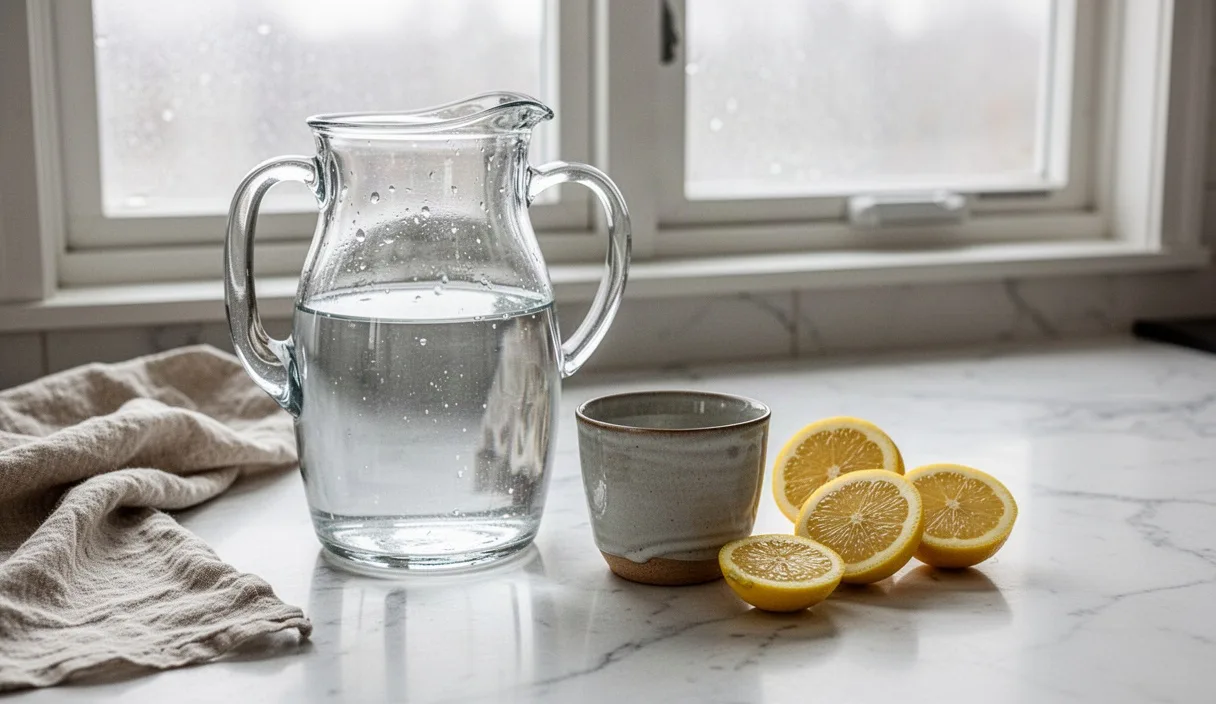
The human body alters how it processes water as the decades advance. In youth, a subtle drop in blood volume triggers a distinct, dry sensation in the mouth and a conscious drive to drink. For individuals past the age of sixty, this feedback loop becomes sluggish. The neurological pathways that detect cellular dehydration lose sensitivity, meaning the conscious desire for water arrives long after the tissues have begun operating at a deficit. Relying on thirst as a primary indicator of hydration in an older body invites silent, ongoing metabolic strain.
At the center of this shift sit the kidneys. These two fist-sized organs filter approximately 180 liters of fluid each day in a healthy young adult, scrubbing metabolic waste while maintaining an exacting balance of electrolytes and plasma volume. As renal mass shrinks and capillary density declines with age, the margin for error narrows. When fluid intake drops, the kidneys must work harder to concentrate urine and clear nitrogenous wastes, creating a state of chronic low-grade stress that accelerates renal decline. Managing hydration in later life is therefore not a casual lifestyle choice; it is an active mechanical protocol requiring deliberate monitoring and steady fluid intake.
The Blunted Thirst Response: Neurological Mechanisms
The sensation of thirst originates in the circumventricular organs of the brain, specifically within the subfornical organ and the organum vasculosum of the lamina terminalis. These specialized vascular structures lack a normal blood-brain barrier, allowing central neurons to sample the osmolality of systemic arterial blood directly. In younger individuals, an increase in plasma osmolality as small as 1% to 2% triggers osmoreceptors to fire, releasing arginine vasopressin from the posterior pituitary and sending strong neural signals to the cerebral cortex to seek fluid.
In older adults, this regulatory loop suffers degradation across multiple nodes. The sensitivity of central osmoreceptors diminishes, meaning systemic blood must become significantly more concentrated before the brain registers a deficit. Concurrently, peripheral baroreceptors located in the carotid sinus and aortic arch lose arterial compliance. These stretch receptors normally detect drops in central blood volume and prompt fluid consumption. When arterial walls stiffen with age, baroreceptors fail to signal moderate hypovolemia effectively. Even when an older individual loses substantial fluid through perspiration or respiration, the conscious sensation of thirst remains suppressed.
Hormonal responsiveness also shifts. While baseline levels of circulating vasopressin may remain normal or even elevate in older adults, the renal tubules become less responsive to this hormone. The medullary concentration gradient inside the kidney flattens, reducing the body's ability to retain free water even when the brain commands it to do so. The result is a dangerous mismatch: the brain fails to demand water, while the kidneys leak more water than intended, accelerating systemic dehydration without sounding a clear internal alarm.
How Chronic Mild Dehydration Accelerates Kidney Strain
Healthy human kidneys experience a natural loss of nephrons over time. After the age of forty, the glomerular filtration rate (GFR) drops by roughly 0.75 to 1.0 milliliter per minute per year. Chronic mild dehydration accelerates this loss through hemodynamic mechanisms. When intravascular volume falls, renal blood flow decreases. To maintain glomerular capillary pressure and sustain filtration, the kidney constricts its efferent arterioles via the renin-angiotensin-aldosterone system. This compensatory mechanism preserves short-term waste clearance, but it subjects the remaining functional nephrons to intraglomerular cardiovascular wellness and mechanical shear stress.
Over months and years, hyperfiltration in surviving nephrons induces glomerulosclerosis, tubulointerstitial fibrosis, and loss of functional renal architecture. Furthermore, concentrated urine increases the dwell time and precipitation risk of mineral salts, notably calcium oxalate and uric acid, driving the formation of micro-calculi that damage tubular epithelial linings. When an older person with subclinical dehydration faces an acute illness, such as a mild bout of gastroenteritis or a heatwave, the kidneys lack reserve capacity, frequently triggering acute kidney injury (AKI) requiring hospitalization.
| Physiological Parameter | Euvolemic State (Adequate Water) | Chronic Hypovolemia (Mild Dehydration) |
|---|---|---|
| Renal Perfusion Pressure | Stable, autoregulated (80-100 mm Hg) | Reduced; relies on persistent efferent constriction |
| Intraglomerular Stress | Evenly distributed across nephron pool | Elevated in surviving nephrons due to hyperfiltration |
| Urine Specific Gravity | 1.008 to 1.018 | Consistently exceeds 1.025 |
| Acute Kidney Injury Vulnerability | Low baseline risk during minor stressors | High; minor fluid deficits precipitate prerenal azotemia |
The risk compounds when common medications enter the equation. Non-sports nutrition anti-inflammatory drugs (NSAIDs) block the synthesis of renal prostaglandins, which are responsible for dilating afferent arterioles to preserve blood flow during states of low volume. Concurrently, angiotensin-converting enzyme (ACE) inhibitors and angiotensin receptor blockers (ARBs) prevent the compensatory constriction of efferent arterioles. When an older adult consumes these common medications while mildly dehydrated, the kidneys lose both their upstream and downstream autoregulatory defenses, causing the glomerular filtration rate to plummet precipitously.
Objective Markers to Track Fluid Balance Daily
Because internal thirst cues fail, older adults must rely on observable external markers to assess their hydration status. Subjective feelings of energy or dryness are insufficient. Implementing a few objective daily measurements provides reliable data to adjust fluid intake before renal strain occurs.
- Morning nude body weight: Acute fluctuations in scale weight over twenty-four hours reflect water gain or loss, not changes in adipose tissue or muscle mass. A sudden drop of 1.5 to 2.5 pounds between consecutive mornings indicates significant fluid deficit requiring intentional replenishment.
- Urine color and output frequency: Healthy urine resembles pale straw or dilute lemonade. Dark amber or tea-colored urine signals severe concentration and elevated renal workload. Voiding fewer than four times per day typically indicates inadequate systemic volume. Be aware that B vitamins and certain medications can impart a bright yellow or orange hue to urine, temporarily obscuring this marker.
- Postural pulse changes: An increase in radial pulse of more than fifteen beats per minute when transitioning from lying down to standing often reveals reduced circulating plasma volume before blood pressure drops noticeably.
- Salivary pool volume: Rather than assessing skin turgor, which is unreliable in aged skin due to the loss of dermal elastin, inspect the oral cavity. A dry sublingual space or thick, stringy saliva indicates systemic hypovolemia.
Laboratory markers evaluated during routine medical visits offer deeper diagnostic clarity. A serum blood urea nitrogen (BUN) to creatinine ratio exceeding 20:1 strongly points to prerenal dehydration, where the kidney reabsorbs urea disproportionately to salvage water. Serum sodium levels rising toward or beyond 145 milliequivalents per liter, combined with calculated serum osmolality above 295 milliosmoles per kilogram, confirm that total body water has fallen below physiological baselines.
Electrolytes and Mineral Balance Beyond Pure Tap Water
Drinking gallons of plain tap or distilled water is not an effective hydration strategy for older bodies. Aging affects the renal tubules' ability to retain sodium, while circulating aldosterone levels generally decline. Flooding the vascular space with hypotonic, unmineralized water dilutes the extracellular compartment. This can precipitate hyponatremia, a condition defined as serum sodium dipping below 135 milliequivalents per liter. Hyponatremia produces confusion, lethargy, gait instability, and an increased incidence of falls, and it is frequently misdiagnosed as acute cognitive decline.
Effective hydration requires maintaining an appropriate balance of mineral salts alongside water molecules. Cellular hydration depends on the osmotic pull generated by dissolved ions, primarily sodium in the extracellular fluid and potassium within the intracellular space. Rather than relying solely on high-volume water consumption, older adults often benefit from incorporating mineral-rich fluids and whole-food hydration sources into their dietary pattern.
Balancing Daily Mineral Sources
Unless restricted by a physician due to advanced chronic kidney disease or severe congestive heart failure, fluid intake should work in tandem with balanced dietary electrolytes:
- Sodium: Moderate sodium intake allows the vascular system to maintain oncotic pressure and preserve glomerular filtration. Lightly salted broths or mineral waters containing native sodium provide hydration without destabilizing blood chemistry.
- Potassium: Fresh produce such as winter squash, leafy greens, and potatoes delivers potassium, which balances intracellular osmotic pressure. However, individuals with estimated GFR below 30 mL/min/1.73 m² or those taking potassium-sparing diuretics must have their potassium intake managed by a nephrologist to avoid life-threatening hyperkalemia.
- Magnesium: Consuming water with naturally occurring magnesium or eating seeds and legumes supports vascular tone and cellular transport mechanisms. Magnesium facilitates the function of the sodium-potassium pump across cell membranes.
Constructing a Structured Daytime Fluid Routine
A reliable hydration protocol does not depend on memory or whim; it operates on a structured schedule anchored to daily habits. For an older adult without severe cardiac or renal failure, a baseline target of 30 to 35 milliliters of total fluid per kilogram of body weight per day is standard. For an individual weighing 70 kilograms (154 pounds), this equates to approximately 2.1 to 2.4 liters of fluid across twenty-four hours, drawn from both beverages and moisture-dense foods.
This intake should be front-loaded into the first eight to ten hours of the waking day. Front-loading achieves two critical objectives: it supplies the kidneys with adequate volume when metabolic waste production from digestion and physical movement is highest, and it prevents nocturia. Frequent nighttime waking to urinate ruins sleep architecture and dramatically increases the risk of nocturnal falls in dimly lit rooms.
Sample Daytime Schedule
To implement this distribution, divide fluid consumption into concrete, non-negotiable blocks tied to predictable routines:
- 07:30 - Immediate post-waking hydration: Drink 350 to 450 milliliters of room-temperature water or weak herbal tea shortly after rising. This replaces the significant respiratory and transdermal water losses that accumulate overnight.
- 10:00 - Mid-morning hydration block: Consume 300 milliliters of fluid, such as mineral water or water infused with citrus slices, paired with a small handful of raw walnuts or a whole fruit.
- 12:30 - Midday meal: Integrate fluid-dense foods into lunch. A bowl of vegetable soup, sliced cucumbers, and a glass of water adds 400 to 500 milliliters of hydration bundled with electrolytes.
- 15:00 - Mid-afternoon hydration block: Drink 350 milliliters of fluid. This is often the time when physical energy dips; mild dehydration frequently masquerades as afternoon fatigue.
- 18:00 - Evening meal: Consume 250 to 300 milliliters of fluid with dinner.
- 20:00 - Final controlled intake: Limit late fluid to no more than 100 to 150 milliliters, enough to moisten the palate or take necessary evening medications without overfilling the bladder before sleep.
Common Mistakes
Several widespread habits actively undermine renal health and fluid balance in older demographics. Identifying and correcting these missteps is essential for maintaining systemic volume without causing secondary health issues.
- Restricting fluids to manage bladder urgency: Many older adults intentionally avoid drinking water to reduce episodes of urinary incontinence or urgency. Restricting fluid results in concentrated, highly acidic urine that chemically irritates the detrusor muscle, exacerbating urgency and significantly raising the risk of urinary tract infections.
- Equating caffeine consumption with zero hydration: While high doses of caffeine exert a mild diuretic effect in non-habituated individuals, moderate coffee or tea consumption does contribute positively to daily net water balance. However, relying solely on heavily caffeinated beverages can disrupt sleep and bladder control; plain water and broths must remain the core foundation.
- Chugging large volumes at once: Gulping down 700 milliliters of water in a single sitting triggers rapid atrial stretch and releases atrial natriuretic peptide (ANP), signaling the kidneys to dump the excess volume immediately. Fluids should be sipped steadily over 20 to 30 minutes to allow gradual absorption into the circulatory system.
- Ignoring temperature preferences: Many older individuals develop a reduced tolerance for ice-cold water, which can trigger esophageal spasms or simple oral discomfort, leading them to abandon drinking. Room-temperature, warm, or lightly brewed herbal infusions are often consumed more consistently and in greater volumes.
Taking the Next Practical Steps
Establishing a successful hydration program begins with establishing an accurate physiological baseline. Schedule an appointment with a primary care physician to review your most recent comprehensive metabolic panel. Examine the baseline serum creatinine, blood urea nitrogen, estimated GFR, and electrolyte levels. Ask your doctor directly if you have any fluid restrictions tied to cardiac output, liver disease, or advanced renal impairment; if you have been placed on a medical fluid restriction, those parameters take precedence over general recommendations.
Once medical parameters are verified, invest in a dedicated, graduated fluid container with clearly marked volume increments in milliliters or ounces. Relying on assorted household drinking glasses makes accurate tracking impossible. Fill this container each morning with your target volume, and verify that the contents are consumed according to your daytime schedule before dusk arrives.
Finally, set up a notebook beside the bathroom scale. Weigh yourself every morning after your first void and before breakfast. Track this number alongside a simple checkmark indicating whether your urine met the pale straw criteria by noon. These concrete, repeatable behaviors shift the control of hydration away from an aging nervous system and into an objective, protective daily routine that keeps your kidneys functional for years to come.