 Aethelgard Press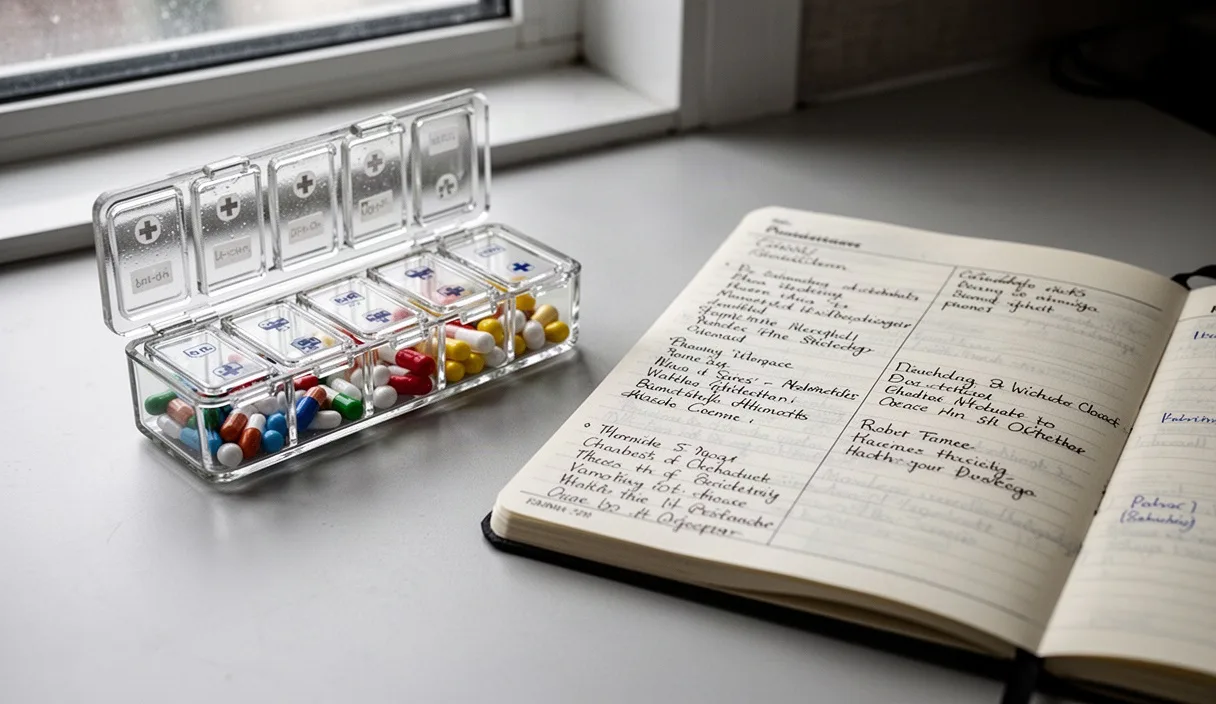
Prescription drugs accumulate gradually. A diagnosis in your forties introduces an cardiovascular wellness agent; a subsequent complaint about sleep yields a sedative-hypnotic; knee pain five years later brings a daily nonsteroidal anti-inflammatory. Specialists frequently add medications to manage individual organ systems without re-evaluating regimens initiated by other practitioners. Over a decade, this fragmented prescribing turns a targeted therapy into an uncoordinated chemical burden.
A comprehensive medication review, often called deprescribing or clinical medication reconciliation, restores therapeutic intent to your daily regimen. It treats your medicine cabinet not as a permanent archive, but as an active intervention that requires regular justification. Taking control of this process requires an exhaustive catalog of what you consume, a firm grasp of drug interaction risks, and a structured conversation with your physician and pharmacist.
The Dangers of Polypharmacy and Drug Interactions
Clinicians define polypharmacy as the routine use of five or more medications concurrently. In adults over age 65, the prevalence of polypharmacy exceeds 40 percent in outpatient clinics. While multiple drugs are often clinically necessary to control complex chronic illnesses such as heart failure or type 2 metabolic balance, each added agent increases the statistical probability of adverse drug reactions exponentially rather than linearly. Two drugs with a 10 percent individual risk of side effects do not carry a simple 20 percent combined risk; their interaction within hepatic metabolic pathways often produces compound hazards.
A central danger of polypharmacy is the prescribing cascade. This occurs when an adverse reaction to one drug is misinterpreted as a new medical condition, prompting the clinician to prescribe a second drug to treat the symptom caused by the first. For example, a patient taking amlodipine for cardiovascular wellness may develop peripheral edema in the ankles. Instead of recognizing this swelling as a known calcium channel blocker side effect, a physician might diagnose fluid retention and prescribe furosemide, a loop diuretic. The diuretic then depletes potassium and magnesium, leading to muscle cramps, which triggers a prescription for a muscle relaxant. The patient now manages three medications, two of which exist solely to treat the untreated side effects of the first.
| Initial Drug | Reported Adverse Effect | Erroneous Secondary Prescription |
|---|---|---|
| Amlodipine (Calcium channel blocker) | Bilateral ankle swelling | Furosemide (Loop diuretic) |
| Metoclopramide (Prokinetic agent) | Tremor and cellular vitality | Levodopa-carbidopa (cellular vitality) |
| Cholinesterase Inhibitors (e.g., Donepezil) | Urinary incontinence | Oxybutynin (Anticholinergic agent) |
| Thiazide Diuretics | Hyperuricemia (Gout flare) | Allopurinol (Urate-lowering therapy) |
Furthermore, human pharmacokinetics change with age. Renal clearance drops by an average of 1 milliliter per minute per year after age 40, reducing your kidneys' capacity to eliminate water-soluble compounds. Hepatic blood flow and cytochrome P450 enzyme activity also decline, prolonging the half-life of lipid-soluble drugs. A dose that cleared your system in 6 hours at age 35 may linger for 18 hours at age 68, leading to inadvertent toxicity despite strict adherence to the label.
Understanding the Beers Criteria for Older Adults
To identify medications whose potential harms outweigh their clinical benefits, the American Geriatrics Society maintains the Beers Criteria for Potentially Inappropriate Medication Use in Older Adults. First developed by Dr. Mark Beers in 1991 and regularly updated by clinical panels, this registry flags medications that present an unacceptable risk profile for individuals aged 65 and older. Familiarity with these categories allows you to identify suspect entries on your own chart before your appointment.
Anticholinergic drugs occupy a prominent position on the Beers list. These agents block acetylcholine, a neurotransmitter critical for involuntary muscle movement, cardiac pacing, and memory retrieval. Diphenhydramine (found in over-the-counter sleep aids and allergy formulas), hydroxyzine, and bladder antispasmodics like oxybutynin carry high anticholinergic burdens. In older bodies, these agents produce acute urinary retention, dry mouth, blurred vision, severe constipation, and an increased rate of acute delirium or cognitive decline.
Sedative-hypnotics and psychotropics represent another high-risk category. daily routine (such as lorazepam, alprazolam, and diazepam) and non-daily routine receptor agonists (the "Z-drugs," including zolpidem and eszopiclone) double the risk of falls, motor vehicle accidents, and hip fractures in older demographics. Their biological half-life extends substantially in aging tissue, creating daytime sedation, ataxia, and impairment in short-term recall. The Beers Criteria explicitly advise avoiding these drugs as first-line treatments for chronic restful sleep support.
Other notable entries on the Beers list include:
- First-generation sulfonylureas: Chlorpropamide and glimepiride cause severe, prolonged hypoglycemia because clearance slows down.
- Systemic NSAIDs: Chronic use of ibuprofen, naproxen, or meloxicam increases the incidence of peptic ulcer disease and acute kidney injury while worsening pre-existing heart failure and cardiovascular wellness.
- Proton pump inhibitors (PPIs): Long-term use beyond 8 weeks without a direct indication (such as severe erosive esophagitis or chronic Barrett esophagus) correlates with Clostridioides difficile infection, bone mineral density loss, and hypomagnesemia.
- Central alpha-blockers: Clonidine and methyldopa present an unacceptable risk of profound orthostatic hypotension and central nervous system adverse effects.
Building an Exhaustive Inventory of Everything You Ingest
Physicians cannot evaluate what they cannot see. Electronic health records are notoriously fragmented; an urgent care clinic, an out-of-network cardiologist, and your dentist may each run isolated software systems that fail to synchronize. Relying on your clinic's digital chart to hold your complete medication record is a mistake. You must construct an independent, primary source inventory.
Execute a comprehensive physical sweep of your home. Clear a flat surface and gather every item intended for human ingestion or topical application. This includes oral prescription tablets, metered-dose inhalers, transdermal patches, eye drops, nasal sprays, injectables, vitamins, botanical tinctures, herbal extracts, workout supplements, and occasional over-the-counter pain relievers. If you chew antacids four nights a week or take pseudoephedrine for seasonal congestion, those must appear on the inventory.
Log each compound on a physical or digital spreadsheet using the following structural columns:
- Brand and generic name: Document both (e.g., Lipitor / atorvastatin).
- Precise dosage and formulation: Record the metric strength and release mechanism (e.g., 50 mg, extended-release, capsule).
- Actual administration routine: Note what you actually do versus what the label says (e.g., "Label says twice daily; I take it once at night because it upsets my stomach").
- Original prescriber: Name the doctor and clinical specialty who initiated the order.
- Current indication: What specific symptom, disease, or biological marker is this compound treating?
- Start date: The approximate month and year the medication was started.
Bring the physical items, along with two printed copies of your spreadsheet, directly to your review appointment. Pharmacists call this a "brown-bag review." Handling the actual containers allows the clinician to examine the exact manufacturer, imprint codes, expiration dates, and remaining pill counts, which reveals practical adherence patterns that electronic lists obscure.
Structuring Questions for Your Pharmacist and Primary Care Physician
Clinical encounters run on compressed timelines. An unguided request to "look over my pills" will often be deferred due to time constraints. To obtain an actionable review, you must frame your request systematically, using clinical terminology that invites critical reassessment rather than passive refills.
Begin by scheduling a dedicated visit. When booking, state explicitly that the purpose of the appointment is a comprehensive medication reconciliation and deprescribing evaluation. Do not combine this assessment with an acute complaint like an ear infection or a broad annual wellness exam. If your insurer permits, book a separate Medication Therapy Management (MTM) consultation with a community or clinical pharmacist first. Pharmacists specialize in pharmacokinetics and drug chemistry; they can analyze your inventory for interactions and prepare a targeted memo for your primary care physician.
During the consultation, proceed down your inventory item by item, asking these four diagnostic questions:
- "What is the ongoing clinical goal for this medication, and is it still meeting that objective?" (e.g., Has blood pressure stabilized to the point where three separate agents are no longer warranted?)
- "Is this drug treating a primary condition, or was it added to counter a side effect from another medication?"
- "Does my current kidney and liver function warrant a dose reduction for this drug?" (Request your latest estimated glomerular filtration rate [eGFR] and liver enzyme panel to cross-reference with drug clearance parameters).
- "What are the clinical consequences if we discontinue or reduce the dose of this compound?"
Demand clarity regarding the difference between absolute disease risk reduction and surrogate endpoints. A drug may successfully lower a laboratory biomarker by 8 percent while offering negligible protection against clinical events like heart attacks or strokes, yet exposing you to measurable daily side effects. You are an autonomous participant in this exchange; your tolerance for daily side effects must weigh against theoretical long-term risk reduction.
Establishing a Safe, Supervised Tapering Schedule When Appropriate
Identifying an unnecessary or hazardous medication is only half the process; removing it requires precise execution. Discontinuing medications abruptly is dangerous. Many drug classes induce neurochemical adaptation, enzyme induction, or receptor upregulation. Stopping them overnight can cause life-threatening rebound effects, acute autonomic destabilization, or severe withdrawal syndromes.
Beta-blockers (such as metoprolol or atenolol) provide a classic illustration of this danger. Chronic beta-blocker administration causes the body to upregulate beta-adrenergic receptors on cardiac tissue. If you cease the drug immediately, circulating catecholamines flood these newly sensitive sites, triggering reflex tachycardia, severe cardiovascular wellness spikes, angina, or acute myocardial infarction. Similarly, selective serotonin reuptake inhibitors (SSRIs), proton pump inhibitors, and gabapentinoids require methodical, incremental dose reductions spread across weeks or months to prevent physiological rebound.
Work with your clinician to design a written deprescribing protocol containing three core parameters:
Establish the rate of reduction. The schedule should dictate precise, stepped dose cuts. A standard protocol might lower an active dose by 25 percent every two to four weeks. In cases where commercial tablets cannot be broken, your physician may need to prescribe intermediate strength formulations or utilize a compounding pharmacy for liquid suspensions.
Define target monitoring metrics. Never taper in the dark. Identify the exact physiological indicators you must track during the reduction window. If you are tapering an cardiovascular wellness, log your blood pressure twice daily using a validated upper-arm cuff. If tapering a metabolic balance agent, increase blood glucose or continuous glucose monitor (CGM) surveillance. If stepping down a proton pump inhibitor, monitor for rebound acid hypersecretion, which often surfaces around day 10 to 14 and can be temporarily managed with dietary adjustments or short-acting antacids.
Set objective stop points. Establish clear numerical thresholds that mandate pausing or reversing the taper. For example: "If systolic blood pressure exceeds 160 mm Hg or diastolic exceeds 95 mm Hg on three consecutive readings, pause the reduction, resume the prior week's dosage, and contact the clinic." This approach removes guesswork and prevents an adverse rebound from spiraling into an emergency room visit.
Common Mistakes During Medication Reviews
Reviewing a medication regimen carries distinct operational hazards. Patients frequently undermine an audit through easily avoidable errors:
- Altering doses independently: Cutting pills in half without pharmacological confirmation can ruin enteric coatings, destroy extended-release delivery systems, or drop drug concentrations below therapeutic thresholds.
- Omitting over-the-counter compounds: Failing to report St. John's Wort (a potent inducer of liver clearance pathways), high-dose vitamin E, or daily ibuprofen skews the clinician's interaction analysis.
- Assuming specialists cross-communicate: Cardiologists, rheumatologists, and neurologists focus tightly on their domains. Never assume one specialist knows what another has prescribed.
- Stopping multiple drugs simultaneously: If you discontinue two or three agents at the same moment and develop fatigue, nausea, or dizziness, neither you nor your doctor will know which compound caused the physiological failure. Deprescribe one medication at a time.
Practical Next Steps
Begin by scheduling your review today. Contact your primary care physician's office and request a 30-minute appointment dedicated exclusively to a medication audit. If your schedule permits, make an appointment with your retail pharmacist first to generate an interaction report.
Carve out an hour this evening to complete your complete physical inventory. Check your bedside drawers, kitchen cabinets, bathroom shelves, and travel bags. Fill out your structured tracking sheet with exact names, doses, and real-world usage patterns. Print two physical copies: one for your provider to write on and enter into your chart, and one for you to keep and annotate during the consultation.
Every drug in your daily regimen must continuously prove its value. By approaching your medications with clinical precision, clear questions, and disciplined tapering protocols, you reduce chemical risks and keep your pharmacotherapy serving its single legitimate purpose: preserving your health and independence.