 Aethelgard Press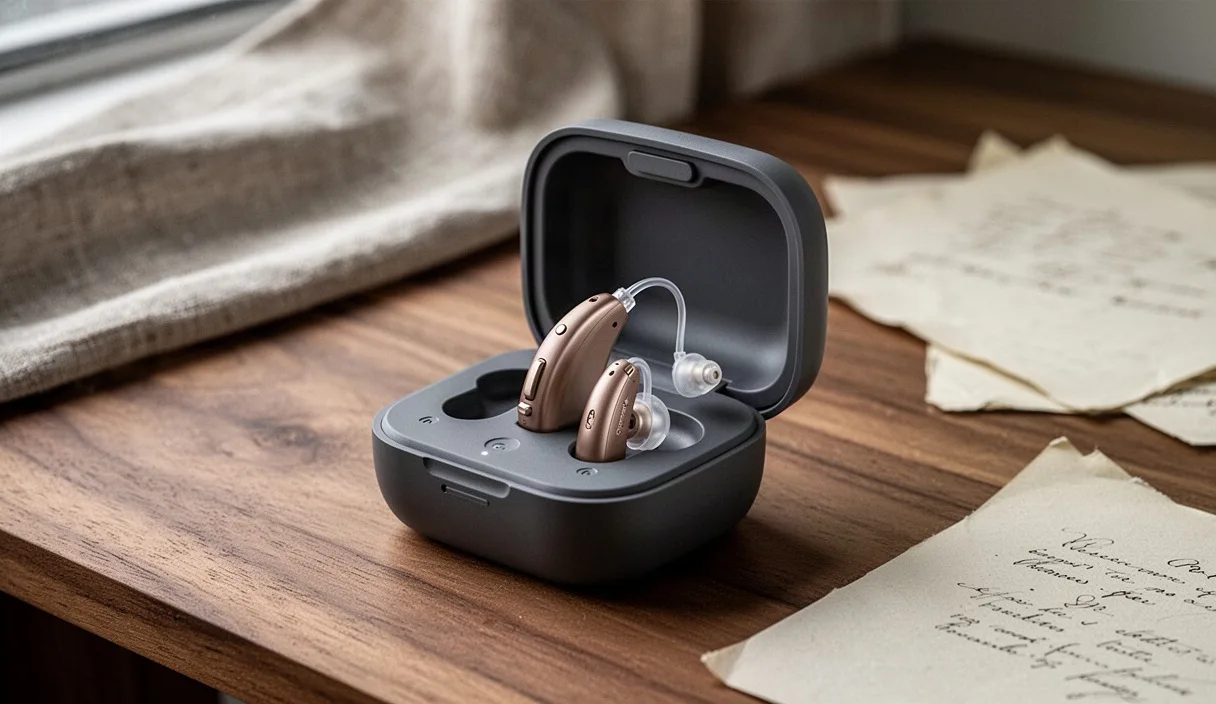
The human brain processes sound not as an isolated mechanical input, but as an active computational puzzle. When sound waves enter the ear canal, the middle ear transfers mechanical vibrations to the fluid-filled cochlea. There, thousands of microscopic sensory hair cells translate physical displacement into electrical spikes sent along the vestibulocochlear nerve. Listening, however, occurs in the cerebral cortex. The auditory cortex categorizes frequencies, while the frontal and temporal networks decode syntax, cross-reference memories, and interpret intent. When the peripheral sensory apparatus degrades, this division of labor breaks down.
The link between peripheral hearing impairment and cognitive decline is direct and mechanical. When the cochlea fails to deliver clear acoustic data, the brain cannot process speech automatically. Instead, it recruits compensatory neural networks normally reserved for working memory, analytical reasoning, and behavioral control. Over months and years, this compensatory rerouting starves other cognitive processes, alters brain structure, and leaves individuals mentally depleted. Understanding this mechanical chain allows you to make informed decisions about diagnostic evaluations and treatment options before neural pathways atrophy.
The Cognitive Load of Straining to Decipher Speech
In optimal hearing conditions, auditory processing requires minimal conscious effort. The brain matches clear, high-resolution phonemic inputs against stored linguistic templates in milliseconds. This efficiency leaves the prefrontal cortex free to synthesize arguments, observe social nuances, and encode new memories. When hearing thresholds drop, the incoming acoustic signal becomes distorted or incomplete. The brain must then treat conversation as an active problem-solving task, guessing missing syllables based on context, lip movements, and probability.
This compensatory decoding relies heavily on working memory. If someone says, "The cat sat on the mat," but high-frequency consonants are missing, the listener might register "The [gap]at [gap]at on the [gap]at." The listener's brain holds the partial sentence in short-term storage while testing possible words: bat, cat, fat, hat, or mat. By the time the sentence is reconstructed, the speaker has already delivered the next phrase. Working memory capacity is finite. When 65 to 80 percent of conscious bandwidth is spent on basic signal reconstruction, executive function drops sharply.
Over time, this strain manifests as profound mental exhaustion. Functional magnetic resonance imaging studies demonstrate that listeners with untreated sensory loss show atypical activation in the dorsolateral prefrontal cortex during simple speech perception tasks. This region should remain largely quiet during casual conversation. Instead, it operates at near-peak capacity, pulling metabolic resources away from other brain networks.
| Factor | Intact Auditory Function | Compensatory Listening (Auditory Loss) |
|---|---|---|
| Primary Brain Region Used | Auditory cortex, superior temporal gyrus | Auditory cortex plus dorsolateral prefrontal cortex |
| Working Memory Availability | High; free for contextual retention and analysis | Low; consumed by real-time phoneme reconstruction |
| Decisional Speed | Immediate and automatic | Delayed by 200 to 600 milliseconds per phrase |
| End-of-Day Fatigue Impact | Minimal auditory-induced fatigue | Severe cognitive and physical exhaustion |
How High-Frequency Loss Sneaks up Undetected
Sensorineural hearing loss rarely presents as an overall drop in volume. Instead, it systematically degrades specific frequencies. The cochlea is organized tonotopically: the wide, flexible base detects high-frequency sounds, while the narrow apex detects low-frequency sounds. Because acoustic energy enters at the base, those high-frequency hair cells absorb the brunt of physical stress throughout a lifetime. As a result, hair cells tuned to frequencies between 2000 Hz and 8000 Hz degrade first.
This anatomical reality creates a deceptive clinical picture. Vowels like /a/, /o/, and /u/ reside in the low-frequency register, typically between 250 Hz and 1000 Hz. These sounds contain approximately 75 percent of speech volume and acoustic power. Consonants such as /s/, /f/, /th/, /t/, and /k/ sit between 2000 Hz and 6000 Hz. These sounds possess very little acoustic power, yet they deliver roughly 85 percent of the clarity and linguistic information. When high-frequency hair cells die, individuals still hear vowels clearly. They conclude that everyone around them is mumbling, rather than recognizing that their own peripheral sensors are failing.
Because the drop-off is gradual, typically progressing at roughly 1 to 2 decibels per year in age-related presbycusis, the brain adapts by relying on visual crutches and contextual clues without conscious awareness. Common early indicators include:
- Struggling to differentiate between similar words like "path," "past," and "pass."
- Missing environmental alerts such as microwave timers, turn signals, or birdsong.
- Experiencing substantial difficulty hearing women and young children, whose voices naturally feature higher fundamental frequencies.
- Turning one side of the head toward the speaker to place the better ear in the direct line of acoustic energy.
- Feeling frustrated in restaurants where low-frequency background noise drowns out the weak high-frequency speech consonants.
What to Expect During a Comprehensive Audiology Exam
A self-administered online test or an automated screening at a pharmacy provides only a coarse baseline. A rigorous audiological evaluation requires a licensed audiologist who performs an array of objective and behavioral measurements inside a calibrated sound-treated booth. You should expect this evaluation to take between 45 and 75 minutes.
The assessment begins with video otoscopy, where the clinician inspects the ear canal and the tympanic membrane. This step rules out mechanical impediments such as impacted cerumen, canal collapse, infection, or fluid accumulation behind the eardrum. Next, the audiologist conducts tympanometry and acoustic reflex testing. A probe creates gentle air pressure variations in the canal to measure the compliance of the middle ear system and the involuntary stapedius muscle contraction triggered by sound.
Diagnostic testing then shifts to behavioral assessments:
- Pure-Tone Air Conduction Testing: Wearing calibrated insert earphones, you listen for tones across frequencies spanning 250 Hz to 8000 Hz. The audiologist establishes your softest audible threshold in decibels hearing level (dB HL) for each individual ear.
- Pure-Tone Bone Conduction Testing: An oscillator is placed against the mastoid bone behind your ear. This bypasses the outer and middle ear structures, sending vibrations directly to the cochlear fluid. Comparing air conduction and bone conduction scores isolates whether a defect is sensorineural, conductive, or mixed.
- Speech Reception Threshold (SRT): The clinician delivers two-syllable spondee words (like "baseball" or "ice cream") at decreasing volumes to confirm the softest intensity at which you can repeat speech accurately.
- Word Recognition Scoring (WRS): Single-syllable, phonetically balanced words are presented at a comfortable listening level above your threshold. This determines your maximum clarity score, indicating how cleanly your auditory nerve delivers words when sufficient volume is provided.
- Speech-in-Noise Testing: Using validated protocols such as the QuickSIN (Quick Speech in Noise) or BKB-SIN, the audiologist measures your signal-to-noise ratio loss. This reveals the decibel advantage you need to understand speech over competing conversational babble.
Overcoming the Neurological Adjustment Period to Amplification
Acquiring hearing aids is not comparable to putting on corrective eyeglasses. Corrective lenses bend light instantly to match a misshapen cornea, delivering crisp vision without mental relearning. In contrast, hearing amplification floods an auditory cortex that may have been deprived of high-frequency inputs for five to ten years. During that period of deprivation, the brain pruned inactive synapses and reallocated auditory cortical real estate to vision and somatosensation.
When amplification restores missing frequencies, the initial sensation is rarely pleasant. Rustling paper sounds like cracking plastic; running tap water resembles a roar; footsteps on hardwood floors sound harsh and metallic. This does not indicate an improperly programmed device. It indicates that the brain has forgotten how to suppress irrelevant, repetitive background sounds. Central auditory pathways require between 30 and 60 days of consistent, full-time acoustic input to rebuild inhibitory filters.
To navigate this neural recalibration systematically, follow a structured adaptation schedule:
- Initial Low-Distraction Wear: Wear the devices for 3 to 4 hours per day inside your own home during quiet activities, such as reading aloud to yourself or listening to a single spoken-voice podcast. This reacquaints your brain with your own voice and basic room acoustics.
- Controlled Dynamic Environments: Increase wear time to 7 or 8 hours daily. Move into mild ambient settings, such as walking in a quiet neighborhood, cooking in the kitchen, or having a one-on-one conversation with a partner.
- All-Day Complete Integration: Insert the instruments upon waking and remove them only before sleep, achieving 12 to 15 hours of continuous wear. The brain cannot rewire its inhibitory pathways if amplification is intermittent.
Insist that your audiologist uses Real Ear Measurement (REM) during the fitting process. REM involves placing a micro-probe tube within a few millimeters of your eardrum while the hearing aid is active. A calibrated speaker plays speech passages, and the software measures the exact decibel output inside your individual ear canal. Without REM, hearing aids programmed strictly to manufacturer defaults can miss targeted acoustic prescriptions by 10 to 18 decibels, leading to device abandonment.
Communication Habits That Reduce Listening Fatigue at Home
Even with calibrated amplification or normal baseline hearing, acoustic architecture governs how much metabolic energy your brain expends during daily communication. Modern homes, with their open-concept floor plans, hardwood flooring, quartz countertops, and vast window walls, create high reverberation environments. Reflected sound waves bounce back and overlap with direct speech signals, smearing consonant clarity.
You can adjust these physical and behavioral variables to slash daily listening fatigue:
- Maintain Visual Access: Visual input through lip shapes, facial muscles, and gestures provides the equivalent of a 4 to 6 decibel acoustic boost. Always establish line-of-sight before speaking. Avoid talking while facing away at a sink or looking down at a mobile device.
- Honor the Distance Equation: Sound pressure drops significantly with distance according to the inverse square law. Doubling the distance between two speakers reduces the incoming acoustic energy by approximately 6 decibels. Never converse across rooms, down hallways, or from another floor. Sit or stand within 4 to 6 feet of each other.
- Tame Room Acoustics: Break up hard, reflective surfaces in the primary gathering areas. Introducing wool area rugs, lined curtains, fabric upholstery, and bookcases dampens fluttering echoes. These additions absorb low-frequency rumble and preserve the clean edge of high-frequency speech sounds.
- Eliminate Competing Signal Generators: Do not attempt serious conversations while background noise sources are active. Turn off the television completely, switch off the kitchen range hood, and mute background audio tracks before beginning an important discussion.
Common Mistakes in Managing Auditory Strain
Individuals struggling with hearing fatigue frequently make errors that extend their cognitive burden. Recognizing these missteps prevents prolonged neural degradation:
- Buying Over-the-Counter Amplifiers for Speech Clarity: Generic sound amplifiers increase all frequencies equally. Increasing the volume of low frequencies merely amplifies background noise and vowel power, muddying speech comprehension further. True sensorineural loss requires precise, frequency-specific gain profiles.
- Delaying Diagnostic Intervention: The average adult waits between 6 and 9 years from the first signs of hearing difficulty before seeking an audiological assessment. This long period of auditory deprivation leads to progressive phonemic regression, where the brain permanently loses the ability to recognize speech structures, even if volume is restored later.
- Part-Time Wear: Treating hearing aids like reading glasses, wearing them only at lectures or restaurants, resets the neural accommodation clock to zero. The brain remains trapped in a perpetual state of acoustic shock, making social situations feel overwhelming rather than comfortable.
- Neglecting Follow-Up Appointments: Brain plasticity takes time. An initial hearing aid fitting is an educated baseline. At least two follow-up visits within the first 60 days are required to review data logs, adjust frequency gain, and modify speech-in-noise algorithms based on real-world experiences.
Practical Next Steps for Auditory and Cognitive Health
If you or someone in your household experiences exhaustion after family dinners, frequently requests repetitions, or struggles to follow dialogue against background noise, treat the issue as a biological bottleneck rather than an inevitable nuisance. This requires methodical, objective action.
First, schedule a comprehensive diagnostic hearing evaluation with a doctoral-level audiologist (Au.D.) or an experienced medical ear specialist (ENT). Request explicit testing for both pure-tone air and bone thresholds, alongside speech-in-noise testing. Ask for a physical copy of your audiogram and retain it as a baseline reference.
Second, if the evaluation reveals bilateral high-frequency loss exceeding 25 dB HL in the conversational speech zones, discuss prescription amplification that incorporates Real Ear Measurement verification. Commit upfront to a 45-day adaptation protocol, keeping a written log of specific sound irritations to review during your follow-up adjustments.
Finally, conduct an acoustic audit of your daily living space. Replace reflective hard surfaces where possible, set firm boundaries regarding communicating across rooms, and ensure that difficult conversations occur face-to-face in controlled, quiet environments. Safeguarding your peripheral auditory inputs directly preserves the executive machinery of your brain.